
Alberta Introduces $135 Fee for Worker Expression of Interest Submissions Under AAIP, Effective April 7
The Alberta Advantage Immigration Program (AAIP) has confirmed that, starting April 7, 2026, foreign nationals submitting a Worker Expression of Interest (WEOI) will be required to pay a new $135 fee, a step that ends the previously free submission process and applies across every worker stream and pathway — including the Alberta Opportunity Stream, the Alberta Express Entry Stream (covering the Accelerated Tech Pathway, the Law Enforcement Pathway and priority sector draws), the Dedicated Health Care Pathways, the Rural Renewal Stream and the Tourism and Hospitality Stream — while remaining entirely separate from the existing $1,500 application fee; the change follows the February 25, 2026 addition of new wage and hours-of-work fields to the WEOI form and comes as more than 44,000 WEOIs sit in the selection pool, with Alberta holding a 2026 allocation of 6,403 nominations from IRCC, of which 1,475 had been issued as of April 1 and 4,928 remain available, with upcoming draws expected to prioritize health care, technology, construction, manufacturing, aviation, agriculture and occupations tied to designated Rural Renewal communities.
04/08/2026

Alberta Holds Six Immigration Draws in Three Weeks, Targeting Rural, Healthcare, and Tech Candidates
Over the past three weeks, the Alberta Advantage Immigration Program (AAIP) announced results from six provincial immigration draws held between February 26 and March 16, 2026. A total of 1,447 invitations were issued across several streams and pathways, including the Alberta Opportunity Stream, Rural Renewal Stream, Alberta Express Entry Priority Sectors pathway for healthcare, the Accelerated Tech pathway, and the Dedicated Health Care Pathway outside Express Entry. The latest round of draws shows Alberta is continuing to prioritize rural labour shortages, healthcare staffing needs, and the attraction of technology talent in 2026. As of March 17, Alberta had received 6,403 nomination spaces for the year, of which 1,127 had already been used, leaving 5,276 spots remaining.
03/23/2026

Manitoba’s Three RCIP Communities Publish 2026 Priority Sectors and Occupation Lists
Manitoba’s three communities participating in Canada’s federal Rural Community Immigration Pilot (RCIP)—Altona/Rhineland, Brandon, and Steinbach—have released their 2026 priority sectors and 25-occupation lists, with notable overlap across sectors and roles. RCIP is an employer-driven permanent residence pathway requiring candidates to secure a qualifying job offer from a community-designated employer and meet eligibility criteria for work experience, education, language, and settlement funds. Officials also indicate that candidates may still be considered with job offers outside a community’s priority occupation list, depending on local priorities and the demonstrated benefit to the community.
03/02/2026

Deep Dive into Canada’s Post-Graduation Work Permit (PGWP): Avoiding Common Pitfalls and Mastering New Policy Requirements
For the vast majority of international students in Canada, the Post-Graduation Work Permit (PGWP) serves as a critical bridge to permanent residency. However, even applicants familiar with basic eligibility criteria may face obstacles by overlooking subtle nuances within the internal assessment standards of Immigration, Refugees and Citizenship Canada (IRCC). According to internal operational instructions used by IRCC officers, the success of an application often hinges on details that are frequently neglected, including the precise application window, the calculation of study permit validity, the accurate declaration of Designated Learning Institutions (DLIs), and proof of continuous full-time student status. Furthermore, with the implementation of new policies on November 1, 2024, language proficiency scores and field-of-study requirements have become new focal points for review. This article combines internal immigration documents with the latest policy updates to comprehensively outline the critical factors applicants must consider when applying for a PGWP, helping to mitigate risks and improve approval probabilities.
02/14/2026

IRCC Confirms Freeze on PGWP-Eligible Field of Study List for 2026
Immigration, Refugees and Citizenship Canada (IRCC) officially confirmed on January 15, 2026, that it will freeze the list of educational programs eligible for the Post-Graduation Work Permit (PGWP) for the entirety of 2026, with no updates or adjustments scheduled. This means that for the remainder of the year, there will be no additions or removals to the existing list of eligible fields. Previously, the government had indicated in 2025 a plan to overhaul the list in "early 2026," but the latest announcement indicates this plan has been put on hold. For international students currently planning to apply for a PGWP, this policy shift provides increased certainty.
01/16/2026

Five Immigration-Related Changes Took Effect Across Canada on January 1, 2026
As of January 1, 2026, several immigration and labour-market measures took effect across Canada. Graduate (master’s and PhD) students at public designated learning institutions (DLIs) no longer need a Provincial or Territorial Attestation Letter (PAL/TAL) for study permits and are no longer counted under the study permit cap, with PhD applicants eligible for expedited processing (as little as two weeks). The federal Start-Up Visa (SUV) program stopped accepting new applications at 11:59 p.m. on December 31, 2025, with a limited exception allowing applicants holding a designated organization commitment made in 2025 to apply until June 30, 2026; new SUV work permits are also no longer accepted, though current permit holders may be able to extend. Ontario introduced an “As of Right” framework enabling out-of-province credentialed professionals in regulated occupations to begin working in Ontario within 10 business days (for up to six months) after credential validation, and it implemented new job-posting rules prohibiting employers from requiring “Canadian work experience,” alongside additional disclosure measures such as whether AI is used in hiring. Alberta, meanwhile, tightened eligibility requirements for its AAIP Rural Renewal Stream, including stricter work-permit rules, residency requirements for lower-skilled occupations, caps on community endorsements, and a 12-month validity period for endorsement letters.
01/04/2026

Canada Suspends Entrepreneur Immigration Programs, Plans New Permanent Residence Pilot
Canada’s federal immigration department has announced major adjustments to its business immigration programs, including the suspension of new applications under the Start-up Visa Program and the continued pause of the Self-Employed Persons Program. The measures are intended to reduce application backlogs and prepare for a more targeted entrepreneur immigration pilot, details of which are expected to be released in 2026.
12/20/2025

Overview of Canada’s Business Immigration Pathways: Federal and Provincial Options for Investors and Entrepreneurs
Canada offers multiple immigration pathways for individuals who wish to immigrate through entrepreneurship or business investment, including the federal Start-Up Visa (SUV), several federal work permit categories, provincial entrepreneur programs, and the Quebec Immigrant Investor Program. Each pathway carries distinct requirements related to investment amounts, business experience, language proficiency, and documentation. With frequent policy changes and complex due-diligence procedures, many applicants work with immigration lawyers or licensed consultants to select the right program, prepare documentation, and maintain compliance to improve approval outcomes and protect their investment.
12/01/2025

Alberta Issues 1,125 Provincial Nominee Invitations in Mid-November, Maintaining High-Frequency Draws Across Key Streams
In mid-November 2025, the Alberta Advantage Immigration Program (AAIP) issued a total of 1,125 provincial nominee invitations across two rounds, targeting candidates in the Healthcare Priority sector under Express Entry as well as the Alberta Opportunity Stream. The November 14 draw invited 80 healthcare candidates with a minimum score of 52, while the November 10 draw issued 1,045 invitations under the Opportunity Stream—a notably large round this year. With Alberta receiving over 1,500 additional nominations in September, bringing its 2025 total to 6,403, the province continues to strengthen efforts to retain local workers and attract healthcare professionals.
11/22/2025
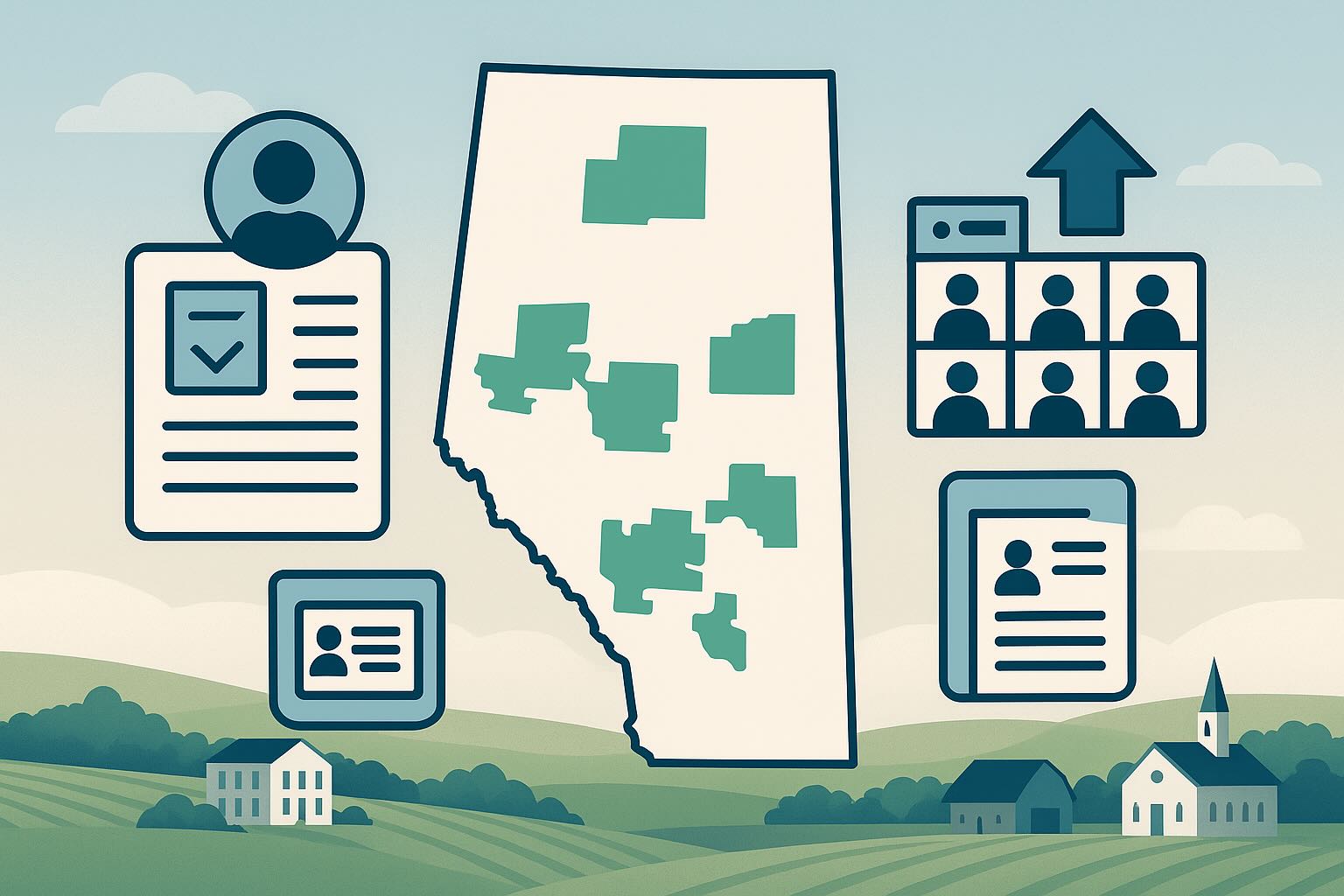
Alberta Announces Sweeping Changes to AAIP Rural Renewal Stream: Community Quotas and New Work Permit Rules to Take Effect in 2026
The Government of Alberta has officially announced significant updates to the Rural Renewal Stream (RRS) under the Alberta Advantage Immigration Program (AAIP), marking one of the most substantial overhauls since the program's inception. Scheduled to take effect on January 1, 2026, these changes are a response to a surge in community endorsements that have far exceeded the province’s federal nomination allocations. To realign the program with provincial economic priorities and manage labor market pressures, Alberta will implement four core changes: establishing annual endorsement allocation limits for designated communities, setting a one-year validity period for candidate endorsement letters, introducing a TEER-based occupation assessment model, and enforcing a mandatory requirement for all in-Canada applicants to hold a valid work permit at both the time of application and assessment.
11/20/2025