
Canada Sets July 15 Launch for Sweeping Overhaul of Immigration Consultant Regulation, with First-Ever Compensation Fund for Victims
Canada's federal government announced on May 6, 2026 that a sweeping overhaul of the regulatory framework governing the College of Immigration and Citizenship Consultants (CICC) will come into force on July 15, 2026 — the most significant regulatory upgrade since the CICC succeeded the Immigration Consultants of Canada Regulatory Council (ICCRC) on November 23, 2021. The new rules give the College stronger disciplinary teeth, allow the federal government to step in and take over the College's board if it fails to protect the public, and establish, for the first time, a dedicated compensation fund to provide redress to clients who suffer financial losses because a CICC-licensed consultant engaged in theft, fraud, misappropriation of funds, misrepresentation, or refusal to cooperate with professional liability insurance; at the same time, the College's public register will be expanded with additional disclosures about each licensee, making it easier for the public to verify a consultant's licensing status, good standing, and disciplinary history — and squeezing the operating space of so-called "ghost consultants."
05/08/2026

Canada Eases In-Canada Status Restoration Rules: Out-of-Status Workers and Students Can Now Apply to Stay as Visitors
Immigration, Refugees and Citizenship Canada (IRCC) on May 1, 2026, updated the operational instructions issued to immigration officers, formally expanding the scope of in-Canada restoration of status: temporary residents who have lost their worker or student status may now apply to be restored directly as visitors, instead of being effectively forced to leave Canada and re-enter as visitors as was generally the case under the previous guidance; applicants must still file within 90 days of losing status, remain in Canada while their application is processed, and immediately stop any activities that depended on the work or study authorization they no longer hold; the change comes at a moment when Canada's temporary resident population is contracting sharply — falling from roughly 3.149 million on October 1, 2024 to about 2.676 million on January 1, 2026, with more than 314,000 work permits set to expire in the first quarter of 2026 alone — and is widely viewed as a softer in-country bridge for workers and international graduates who cannot immediately secure a new work permit or a permanent residence pathway.
05/02/2026

Canada Expands Open Work Permit Eligibility for Spouses of Foreign Workers at Two B.C. Companies
Canada has further expanded work permit access for family members of foreign workers employed by selected companies. As of March 23, 2026, foreign workers employed in British Columbia by Lululemon Athletica or Microsoft Vancouver can support an open work permit application for their spouse or common-law partner, without the usual restrictions based on the principal applicant’s skill level, salary, or seniority. The new measure applies to applications received on or after that date and represents a targeted exemption for companies tied to significant investment projects, even as Canada continues tightening spousal open work permit rules more broadly.
03/25/2026

Canada Introduces Two New Facilitated Work Permit Pathways for Youths from Taiwan and Portugal
Canada has recently introduced two new facilitated work permit pathways under the International Experience Canada (International Experience Canada, or IEC) program for young people from Taiwan and Portugal. These are the TGPI program for Taiwanese youth and the Inov Contacto program for Portuguese youth. Both new pathways offer employer-specific work permits and include tailored arrangements in terms of program structure, financial support, and eligibility requirements. At the same time, applicants from Taiwan and Portugal may still continue to apply under the regular criteria for the IEC Young Professionals category. The new policy suggests that Canada is further expanding youth talent exchange and short-term employment cooperation with specific countries and regions through bilateral youth mobility arrangements.
03/10/2026

Five Immigration-Related Changes Took Effect Across Canada on January 1, 2026
As of January 1, 2026, several immigration and labour-market measures took effect across Canada. Graduate (master’s and PhD) students at public designated learning institutions (DLIs) no longer need a Provincial or Territorial Attestation Letter (PAL/TAL) for study permits and are no longer counted under the study permit cap, with PhD applicants eligible for expedited processing (as little as two weeks). The federal Start-Up Visa (SUV) program stopped accepting new applications at 11:59 p.m. on December 31, 2025, with a limited exception allowing applicants holding a designated organization commitment made in 2025 to apply until June 30, 2026; new SUV work permits are also no longer accepted, though current permit holders may be able to extend. Ontario introduced an “As of Right” framework enabling out-of-province credentialed professionals in regulated occupations to begin working in Ontario within 10 business days (for up to six months) after credential validation, and it implemented new job-posting rules prohibiting employers from requiring “Canadian work experience,” alongside additional disclosure measures such as whether AI is used in hiring. Alberta, meanwhile, tightened eligibility requirements for its AAIP Rural Renewal Stream, including stricter work-permit rules, residency requirements for lower-skilled occupations, caps on community endorsements, and a 12-month validity period for endorsement letters.
01/04/2026

Canada Suspends Entrepreneur Immigration Programs, Plans New Permanent Residence Pilot
Canada’s federal immigration department has announced major adjustments to its business immigration programs, including the suspension of new applications under the Start-up Visa Program and the continued pause of the Self-Employed Persons Program. The measures are intended to reduce application backlogs and prepare for a more targeted entrepreneur immigration pilot, details of which are expected to be released in 2026.
12/20/2025

Nova Scotia Overhauls Provincial Nominee and AIP Selection System with New EOI Model
On November 28, 2025, Nova Scotia announced a major shift in its immigration intake system, confirming that all submissions under the Nova Scotia Provincial Nominee Program (NSPNP) and the Atlantic Immigration Program (AIP) will now be processed through an Expression of Interest (EOI) model. Under the new rules, all submissions—regardless of submission date—are considered EOIs, and having a case ID or meeting eligibility criteria no longer guarantees file processing. The province will conduct periodic draws based on current labor market and economic priorities, with priority sectors such as healthcare, construction, trades, STEM, natural resources, and manufacturing. The shift aligns with broader trends driven by reduced provincial nomination allocations from IRCC. With increased immigration targets set for 2026, applicants may soon see improved chances of receiving selections.
12/03/2025

Overview of Canada’s Business Immigration Pathways: Federal and Provincial Options for Investors and Entrepreneurs
Canada offers multiple immigration pathways for individuals who wish to immigrate through entrepreneurship or business investment, including the federal Start-Up Visa (SUV), several federal work permit categories, provincial entrepreneur programs, and the Quebec Immigrant Investor Program. Each pathway carries distinct requirements related to investment amounts, business experience, language proficiency, and documentation. With frequent policy changes and complex due-diligence procedures, many applicants work with immigration lawyers or licensed consultants to select the right program, prepare documentation, and maintain compliance to improve approval outcomes and protect their investment.
12/01/2025

Canada Proposes Bill C-12 to Overhaul Immigration Processing, Potentially Affecting Start-Up Visa Applications
Immigration, Refugees and Citizenship Canada (IRCC) has introduced Bill C-12, aiming to modernize and strengthen the management of Canada’s immigration system while addressing long-standing backlogs. If passed, the bill would grant the Minister expanded authority to pause or terminate the processing of certain immigration categories. Analysts suggest that the Start-Up Visa (SUV) program — already facing significant application backlogs — could be among the most directly affected, particularly for applicants supported by designated business incubators that fail to comply with Ministerial Instructions (MI72).
10/23/2025
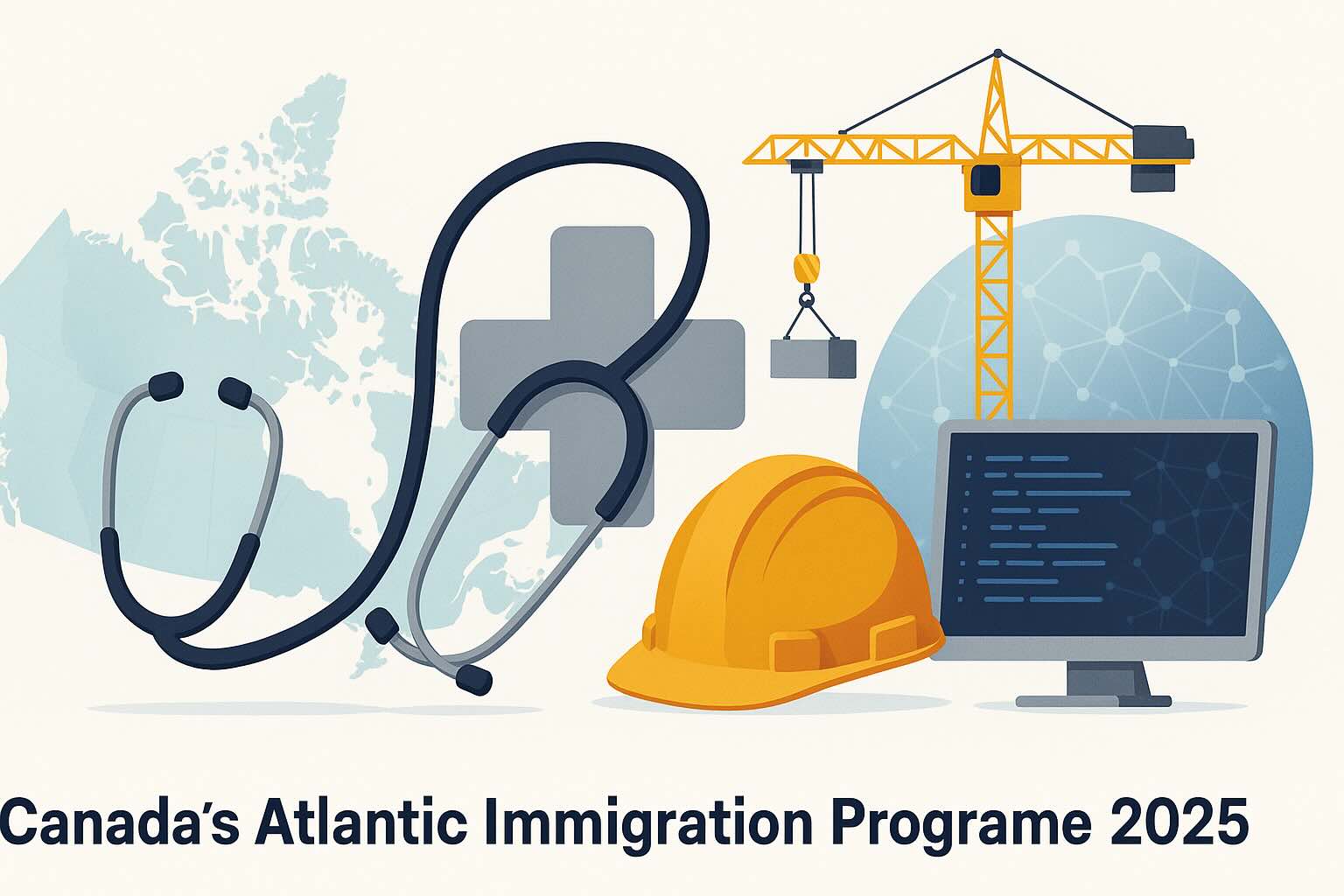
Canada's Atlantic Immigration Program: 2025 Updates See Provinces Prioritize Key Sectors and Occupations
In 2025, Canada's Atlantic Immigration Program (AIP) is entering a new strategic phase due to adjusted federal immigration allocations. To manage reduced quotas, the four Atlantic provinces are concentrating their resources on key sectors vital to their local economies. Healthcare, construction, and information technology have become focal points for attracting talent. This report provides an in-depth analysis of the latest priority sectors and occupations for each province, examines the alternative pathways available in New Brunswick following its AIP pause, and offers authoritative guidance for applicants planning to immigrate through this program in 2025.
08/21/2025