
Manitoba’s Three RCIP Communities Publish 2026 Priority Sectors and Occupation Lists
Manitoba’s three communities participating in Canada’s federal Rural Community Immigration Pilot (RCIP)—Altona/Rhineland, Brandon, and Steinbach—have released their 2026 priority sectors and 25-occupation lists, with notable overlap across sectors and roles. RCIP is an employer-driven permanent residence pathway requiring candidates to secure a qualifying job offer from a community-designated employer and meet eligibility criteria for work experience, education, language, and settlement funds. Officials also indicate that candidates may still be considered with job offers outside a community’s priority occupation list, depending on local priorities and the demonstrated benefit to the community.
03/02/2026

Five Immigration-Related Changes Took Effect Across Canada on January 1, 2026
As of January 1, 2026, several immigration and labour-market measures took effect across Canada. Graduate (master’s and PhD) students at public designated learning institutions (DLIs) no longer need a Provincial or Territorial Attestation Letter (PAL/TAL) for study permits and are no longer counted under the study permit cap, with PhD applicants eligible for expedited processing (as little as two weeks). The federal Start-Up Visa (SUV) program stopped accepting new applications at 11:59 p.m. on December 31, 2025, with a limited exception allowing applicants holding a designated organization commitment made in 2025 to apply until June 30, 2026; new SUV work permits are also no longer accepted, though current permit holders may be able to extend. Ontario introduced an “As of Right” framework enabling out-of-province credentialed professionals in regulated occupations to begin working in Ontario within 10 business days (for up to six months) after credential validation, and it implemented new job-posting rules prohibiting employers from requiring “Canadian work experience,” alongside additional disclosure measures such as whether AI is used in hiring. Alberta, meanwhile, tightened eligibility requirements for its AAIP Rural Renewal Stream, including stricter work-permit rules, residency requirements for lower-skilled occupations, caps on community endorsements, and a 12-month validity period for endorsement letters.
01/04/2026

Canada Announces Pause on Home Care Worker Pilot Applications; Will Not Reopen in March 2026
Immigration, Refugees and Citizenship Canada (IRCC) released a statement on December 19, 2025, announcing an immediate pause on new applications for the Home Care Worker Pilots until further notice. The federal government explicitly stated that the programs will not reopen in March 2026 as originally planned, a decision that effectively cuts off a key immigration pathway that many prospective applicants had expected to utilize next year. This pause is part of the federal government's broader effort to recalibrate immigration quotas under the 2026–2028 Immigration Levels Plan, aiming to prevent further growth in application backlogs, ensure existing cases are prioritized, and make the immigration system more responsive to actual labour market needs.
12/27/2025

Canada Suspends Entrepreneur Immigration Programs, Plans New Permanent Residence Pilot
Canada’s federal immigration department has announced major adjustments to its business immigration programs, including the suspension of new applications under the Start-up Visa Program and the continued pause of the Self-Employed Persons Program. The measures are intended to reduce application backlogs and prepare for a more targeted entrepreneur immigration pilot, details of which are expected to be released in 2026.
12/20/2025

Overview of Canada’s Business Immigration Pathways: Federal and Provincial Options for Investors and Entrepreneurs
Canada offers multiple immigration pathways for individuals who wish to immigrate through entrepreneurship or business investment, including the federal Start-Up Visa (SUV), several federal work permit categories, provincial entrepreneur programs, and the Quebec Immigrant Investor Program. Each pathway carries distinct requirements related to investment amounts, business experience, language proficiency, and documentation. With frequent policy changes and complex due-diligence procedures, many applicants work with immigration lawyers or licensed consultants to select the right program, prepare documentation, and maintain compliance to improve approval outcomes and protect their investment.
12/01/2025

Canada Proposes Bill C-12 to Overhaul Immigration Processing, Potentially Affecting Start-Up Visa Applications
Immigration, Refugees and Citizenship Canada (IRCC) has introduced Bill C-12, aiming to modernize and strengthen the management of Canada’s immigration system while addressing long-standing backlogs. If passed, the bill would grant the Minister expanded authority to pause or terminate the processing of certain immigration categories. Analysts suggest that the Start-Up Visa (SUV) program — already facing significant application backlogs — could be among the most directly affected, particularly for applicants supported by designated business incubators that fail to comply with Ministerial Instructions (MI72).
10/23/2025

Canada Closes Permanent Residence Pathway for Overseas Caregivers
Immigration, Refugees and Citizenship Canada (IRCC) recently updated its official website to indicate that the "applicants not working in Canada" stream under the Home Care Worker Immigration Pilots (HCWP) has been officially closed. This stream was marked as "closed" on September 29, 2025, without ever having opened to accept applications since the program's launch. Despite this closure, overseas caregivers still have alternative pathways to immigrate to Canada through Express Entry, Provincial Nominee Programs, and other routes. Industry analysts suggest this decision may be linked to severe application backlogs and the federal government's policy shift toward prioritizing the transition of temporary residents already in Canada to permanent residence status.
10/02/2025
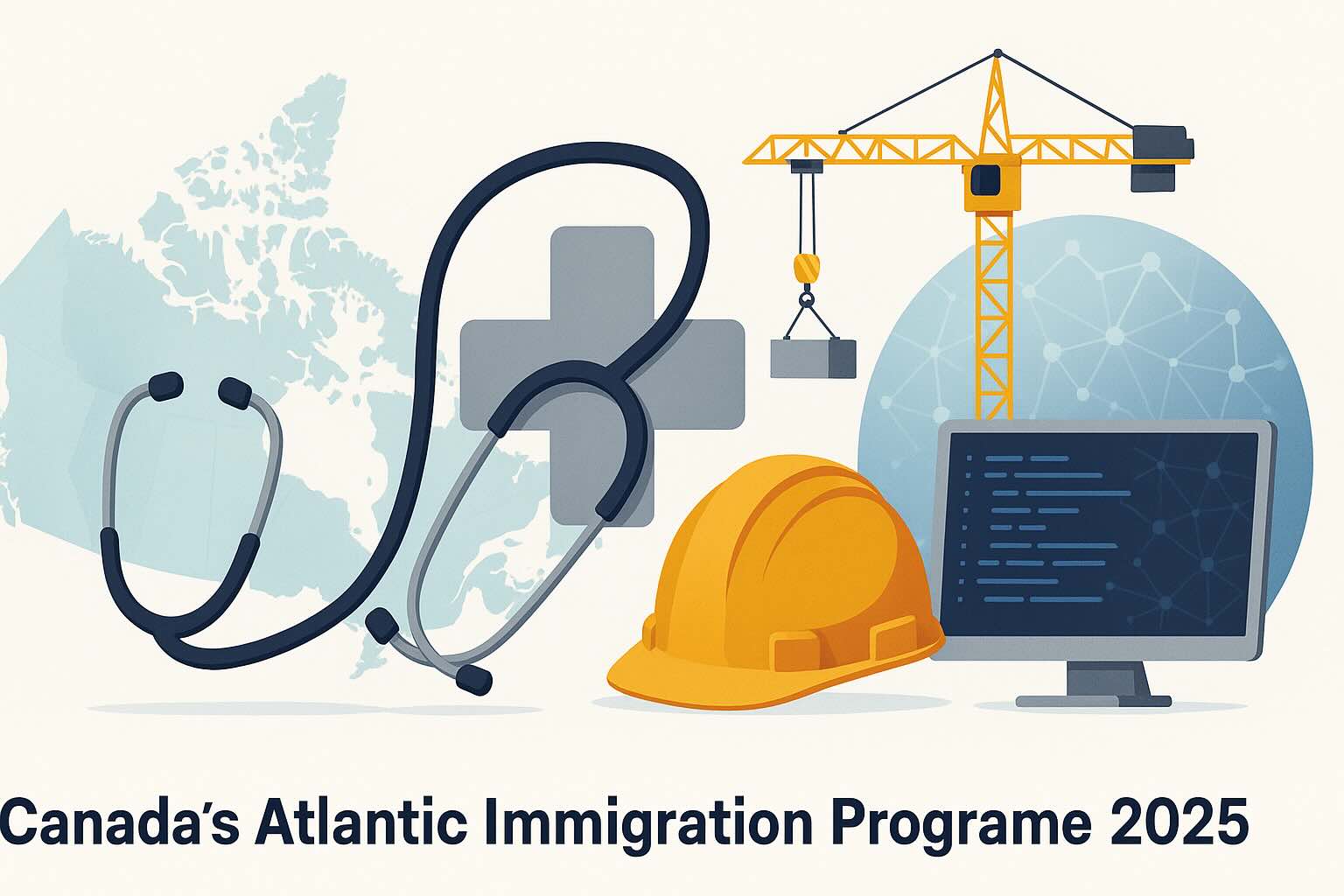
Canada's Atlantic Immigration Program: 2025 Updates See Provinces Prioritize Key Sectors and Occupations
In 2025, Canada's Atlantic Immigration Program (AIP) is entering a new strategic phase due to adjusted federal immigration allocations. To manage reduced quotas, the four Atlantic provinces are concentrating their resources on key sectors vital to their local economies. Healthcare, construction, and information technology have become focal points for attracting talent. This report provides an in-depth analysis of the latest priority sectors and occupations for each province, examines the alternative pathways available in New Brunswick following its AIP pause, and offers authoritative guidance for applicants planning to immigrate through this program in 2025.
08/21/2025

Focusing on Labour Market Needs: Newfoundland and Labrador's Latest Immigration Draw Targets 359 Candidates
On July 10, 2025, Newfoundland and Labrador's Office of Immigration and Multiculturalism (OIM) issued 359 Invitations to Apply (ITAs) for provincial immigration to foreign nationals. Spanning both the Provincial Nominee Program (NLPNP) and the Atlantic Immigration Program (AIP), this draw explicitly requires candidates to hold a job or job offer from a local employer and prioritizes professionals in key fields like healthcare, information technology (ICT), and aquaculture to meet the province's urgent labour market needs.
07/25/2025

Newfoundland and Labrador Continues EOI Invitations Amidst Allocation Adjustments
Newfoundland and Labrador issued 328 Invitations to Apply (ITAs) on May 8, 2025, in its second round of draws through the new Expression of Interest (EOI) system. This system, implemented on February 19, 2025, manages candidates for both the Provincial Nominee Program (NLPNP) and the Atlantic Immigration Program (AIP). Despite facing an initial halving of its federal nomination allocation, the province successfully secured additional spaces, enhancing opportunities for prospective immigrants.
05/20/2025