
Canada Changes How Super Visa Income Requirements for Parents and Grandparents Are Calculated, with New Rules Taking Effect on March 31
The Canadian federal government announced in Ottawa on March 20, 2026, that it will change how income requirements are calculated for the Parents and Grandparents Super Visa starting March 31, 2026. The new policy, to be implemented by Immigration, Refugees and Citizenship Canada (IRCC), is intended to make it easier for more families to qualify while ensuring that family members receive adequate financial support during their stay in Canada. Under the updated rules, a host’s income will no longer be assessed based only on the tax year immediately preceding the application. Instead, hosts may qualify by meeting the requirement in either of the two preceding tax years. In addition, if the host and co-signer have already met the required minimum percentage of income, the income of the visiting parent or grandparent may also be used to make up the remaining amount. IRCC said that all applications already in processing as of March 31, 2026, as well as those submitted on or after that date, will be assessed under the new criteria.
03/21/2026

New Brunswick Overhauls Provincial Immigration Pathways, Restricting Several Occupations
The Government of New Brunswick announced and implemented a wide-ranging set of changes on February 3, 2026, affecting both the New Brunswick Provincial Nominee Program (NBPNP) and the province’s Atlantic Immigration Program (AIP). The updates include removing consideration for accommodation and food services (NAICS 72) roles across multiple pathways, excluding several specific occupations from consideration, moving AIP endorsement processing to a candidate-pool model, temporarily pausing new AIP employer designation applications, and tightening endorsement eligibility for overseas candidates to three priority sectors. In addition, New Brunswick will extend its Private Career College Graduate Pilot through the end of 2026 in a limited capacity for certain international students already enrolled in eligible programs at Oulton College or Eastern College whose completion dates extend beyond the pilot’s original end date.
02/06/2026

Saskatchewan Unveils 2026 SINP Allocation and Strategic Overhaul: Nomination Cap Maintained at 4,761 with New Sector-Based Tiers
The Saskatchewan Immigrant Nominee Program (SINP) has officially announced its nomination allocation and a series of significant policy changes for 2026. The province has received an initial allocation of 4,761 nomination spaces, matching the total at the end of 2025. In a major shift, the federal government has removed the 2025 requirement that 75% of nominees must already be in Canada, granting Saskatchewan greater flexibility to select overseas candidates. For the upcoming year, the SINP is implementing a new three-tier distribution strategy: "Priority Sectors" (such as healthcare and agriculture) will be allocated at least 50% of nominations with open intake, while "Capped Sectors" (including hospitality and retail) will face strict percentage limits and scheduled application windows. Furthermore, the province has introduced tighter eligibility criteria for open work permit holders and Post-Graduation Work Permit (PGWP) holders, specifically affecting out-of-province graduates.
12/31/2025

Saskatchewan Announces 2026 Nomination Allocation and Major SINP Reforms
The Government of Saskatchewan has officially announced its provincial nomination plan for 2026, confirming that the Saskatchewan Immigrant Nominee Program (SINP) will have a total allocation of 4,761 nominations, unchanged from the end of 2025. To support the use of this allocation, the province will introduce a series of structural reforms in 2026, including clearly defined nomination shares for priority and capped sectors, greater flexibility for priority-sector applicants, and stricter eligibility rules for international students and certain open work permit holders.
12/25/2025

New Brunswick Holds Three Immigration Draws, Issues Over 500 Invitations to Apply
Between October 6 and 9, 2025, the New Brunswick Provincial Nominee Program (NB PNP) held three consecutive draws, issuing invitations to apply to over 500 candidates. The draws were conducted through two main categories: the New Brunswick Express Entry stream for individuals employed in the province, and the Skilled Worker stream for those working in priority occupations. The provincial government also reminded applicants that not all applications submitted in response to these draws will be processed by the end of 2025.
10/20/2025

New Brunswick Issues Over 1,000 Provincial Nomination Invitations in August, Focusing on Healthcare, Education, and Construction Industries
The New Brunswick Provincial Nominee Program (NB PNP) conducted four rounds of invitation draws between August 11 and 19, 2025, issuing a total of 1,052 invitations to apply for provincial nomination. These invitations were distributed through two channels: the New Brunswick Skilled Worker stream and the New Brunswick Express Entry stream. To date, the province has issued a cumulative total of 3,067 invitations in 2025, exceeding its annual allocation of 3,000 nomination spots.
09/29/2025

Saskatchewan Receives Increased Immigration Allocation, Creating New Opportunities for Priority Sectors
The Canadian province of Saskatchewan has announced that its 2025 Provincial Nominee Program (SINP) has received an additional 1,136 nominations from the federal government, bringing its total annual allocation to 4,761. This adjustment reopens application pathways for several sectors that were previously paused due to reaching their caps. Against a backdrop of diverging immigration allocation trends across Canada, this development in Saskatchewan, along with increases in several other provinces, highlights the complex and evolving landscape of federal and provincial immigration policies.
08/29/2025
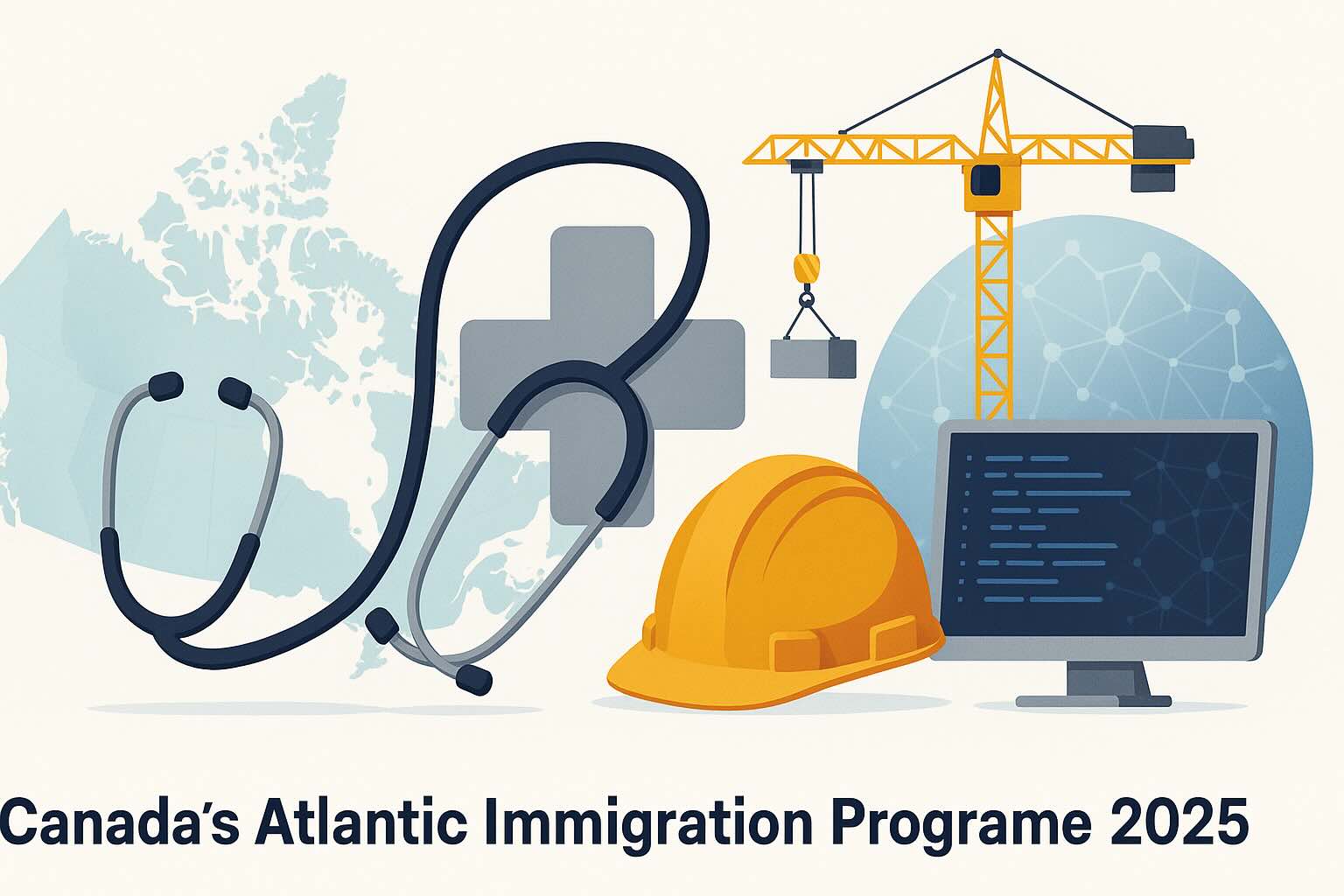
Canada's Atlantic Immigration Program: 2025 Updates See Provinces Prioritize Key Sectors and Occupations
In 2025, Canada's Atlantic Immigration Program (AIP) is entering a new strategic phase due to adjusted federal immigration allocations. To manage reduced quotas, the four Atlantic provinces are concentrating their resources on key sectors vital to their local economies. Healthcare, construction, and information technology have become focal points for attracting talent. This report provides an in-depth analysis of the latest priority sectors and occupations for each province, examines the alternative pathways available in New Brunswick following its AIP pause, and offers authoritative guidance for applicants planning to immigrate through this program in 2025.
08/21/2025

Super Visa: Canada's 'Fast Track' Alternative for Parent and Grandparent Reunification
For many families hoping to reunite with parents or grandparents in Canada, the limited lottery for the Parents and Grandparents Program (PGP) presents a significant hurdle. This article provides an in-depth analysis of Canada's Super Visa program, which serves as an attractive alternative by offering a long-term visitor visa with year-round applications. The report details the core differences between the Super Visa and the PGP, outlines eligibility criteria and application procedures, and offers professional strategies to address common reasons for refusal, helping applicants increase their chances of success.
08/17/2025

Success is in the Details: A Guide to Navigating Canada's PGP Application and Avoiding 5 Critical Pitfalls
Canada's Parents and Grandparents Program (PGP) is a vital pathway for many families to reunite. However, after receiving an Invitation to Apply (ITA), common mistakes in the application process can derail an applicant's efforts. This article provides a detailed analysis of the five most common application "pitfalls," including incomplete applications, replying to no-reply emails, inconsistent information, improper form signing, and omitting periods of unemployment. It also offers specific strategies to avoid them, aiming to help applicants increase their chances of success and smoothly complete what may be a once-in-a-lifetime sponsorship opportunity.
07/30/2025