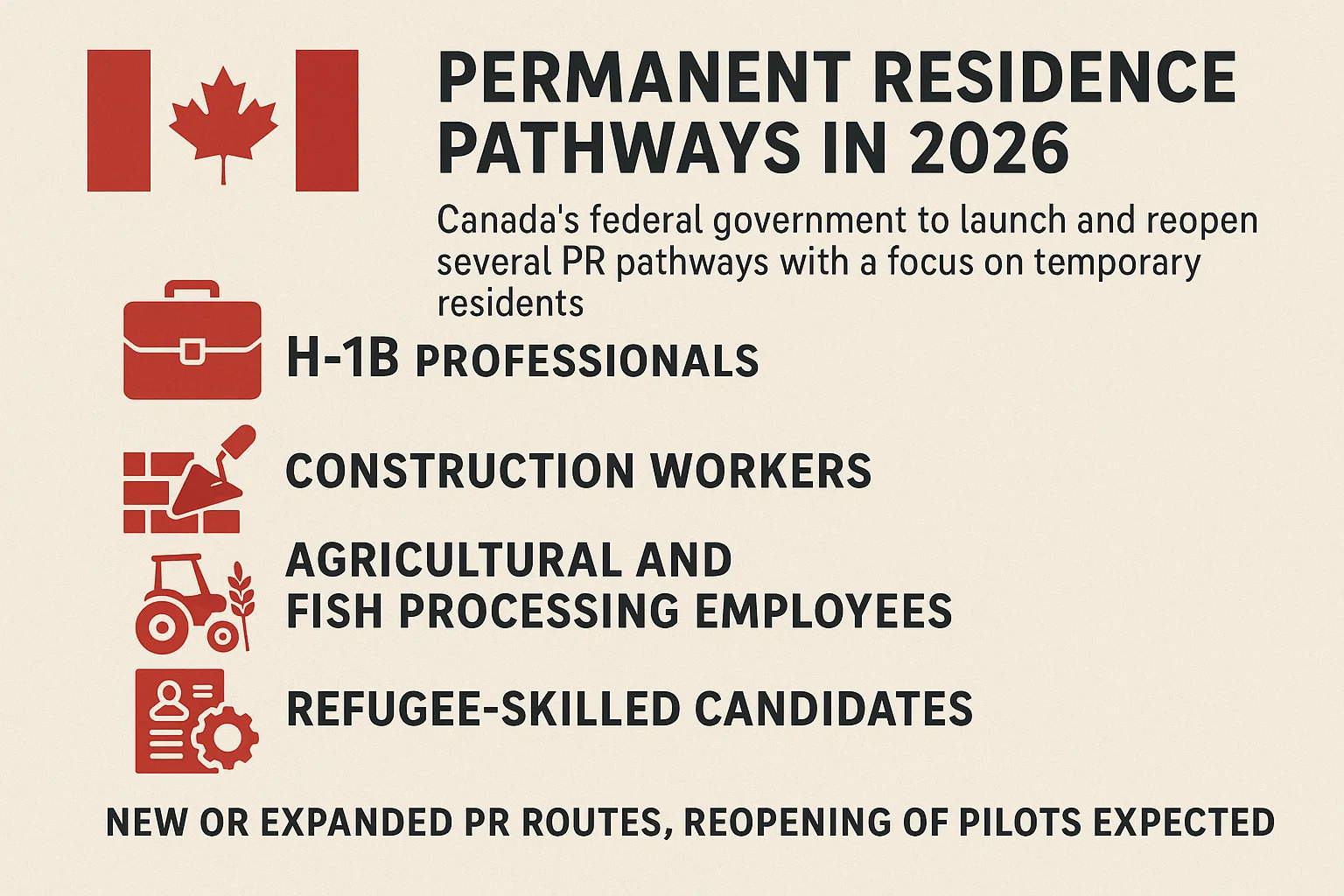
Canada to Introduce Multiple New Permanent Residence Pathways in 2026
Canada’s federal government is preparing to launch and reopen several permanent residence (PR) pathways in 2026, with a strong focus on transitioning more temporary residents already living in the country. The upcoming year will also see new or expanded PR routes for H-1B professionals, construction workers, agricultural and fish processing employees, and refugee-skilled candidates. Multiple pilots that reached their caps in 2025 are expected to reopen. As many details remain pending, 2026 is shaping up to be a significant year of structural updates to Canada’s immigration system.
12/04/2025

Ontario plans new skilled immigration pathways as Bill 30 expands provincial authority over OINP
Ontario is preparing to introduce new permanent residence pathways under the Ontario Immigrant Nominee Program (OINP), targeting newcomers in fields such as research, culinary arts, and entrepreneurship. Immigration Minister David Piccini announced on November 25 that the province intends to launch a new “talent stream” to recognize excellence in these sectors. With Bill 30 (the Working for Workers Seven Act, 2025) receiving Royal Assent on November 27, the suspension of the Skilled Trades Stream, and expected increases in provincial nomination allocations for 2026, Ontario is restructuring its immigration program to support more targeted and flexible selection mechanisms.
12/02/2025

Overview of Canada’s Business Immigration Pathways: Federal and Provincial Options for Investors and Entrepreneurs
Canada offers multiple immigration pathways for individuals who wish to immigrate through entrepreneurship or business investment, including the federal Start-Up Visa (SUV), several federal work permit categories, provincial entrepreneur programs, and the Quebec Immigrant Investor Program. Each pathway carries distinct requirements related to investment amounts, business experience, language proficiency, and documentation. With frequent policy changes and complex due-diligence procedures, many applicants work with immigration lawyers or licensed consultants to select the right program, prepare documentation, and maintain compliance to improve approval outcomes and protect their investment.
12/01/2025
Canada Announces 2026 Study Permit Target: Total Allocation Reduced to 408,000, Down 7% from 2025
On November 25, the Government of Canada officially released its 2026 study permit allocation and distribution plan for international students. According to newly published data from Immigration, Refugees and Citizenship Canada (IRCC), the total number of study permits to be issued in 2026 will be capped at 408,000. This continues the federal government’s trend of tightening temporary resident levels, representing a 7% decrease from the 2025 cap of 437,000 and a 16% decrease compared to 485,000 in 2024. The new plan outlines detailed allocation rules by student category, confirms exemptions from Provincial Attestation Letters (PAL) for master’s and PhD students, and distributes PAL-required application volumes and anticipated approvals across provinces based on population share.
11/27/2025

Prince Edward Island Holds Largest Provincial Nominee Draw of the Year, Focusing on In-Province Workers and International Graduates
The Prince Edward Island Provincial Nominee Program (PEI PNP) recently conducted its largest immigration draw of the year, issuing invitations to apply for provincial nomination to nearly 200 candidates through the "Labour & Express Entry" category. This draw primarily targeted candidates already working in the province, while giving priority consideration to applicants with French language proficiency and international graduates from specific institutions. This move reflects the province's strategic intent to attract skilled talent capable of directly contributing to the local economy.
11/25/2025
Canada’s Conservatives Push for Major Amendments to Border and Immigration Bill C-12
On November 20, Conservative MP Michelle Rempel Garner, a member of the House of Commons Standing Committee on Citizenship and Immigration, announced that the Conservative Party will introduce a wide-ranging package of amendments to the federal government’s border security and immigration legislation, Bill C-12. She argued that Canada’s immigration system is under intense pressure and must undergo structural reform as soon as possible. The proposed amendments will focus on modernizing asylum procedures, strengthening border enforcement and security screening, adjusting criminality and removal thresholds, and increasing transparency across federal immigration bodies. The initiative comes amid rising asylum numbers, sustained growth in temporary residents, mounting pressure on housing and social services, and heightened scrutiny of immigration-related security reports—highlighting how immigration has become a heated issue in Canada and globally.
11/21/2025
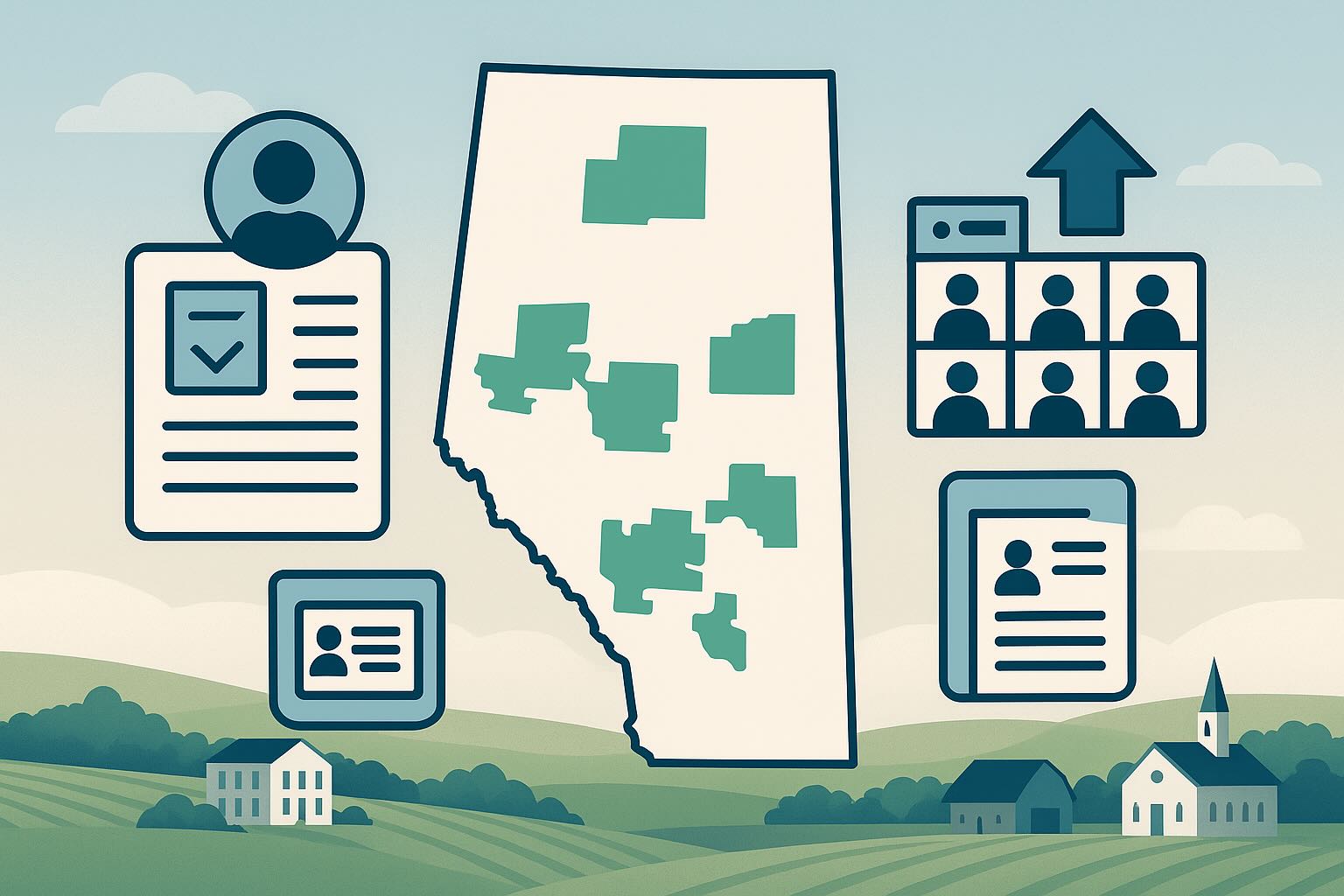
Alberta Announces Sweeping Changes to AAIP Rural Renewal Stream: Community Quotas and New Work Permit Rules to Take Effect in 2026
The Government of Alberta has officially announced significant updates to the Rural Renewal Stream (RRS) under the Alberta Advantage Immigration Program (AAIP), marking one of the most substantial overhauls since the program's inception. Scheduled to take effect on January 1, 2026, these changes are a response to a surge in community endorsements that have far exceeded the province’s federal nomination allocations. To realign the program with provincial economic priorities and manage labor market pressures, Alberta will implement four core changes: establishing annual endorsement allocation limits for designated communities, setting a one-year validity period for candidate endorsement letters, introducing a TEER-based occupation assessment model, and enforcing a mandatory requirement for all in-Canada applicants to hold a valid work permit at both the time of application and assessment.
11/20/2025
Newfoundland and Labrador issues 330 ITAs in latest draw, marking the largest round since July
On November 12, 2025, Newfoundland and Labrador issued a total of 330 Invitations to Apply (ITAs) through the Newfoundland and Labrador Provincial Nominee Program (NLPNP) and the Atlantic Immigration Program (AIP), marking the largest draw since July. With 220 invitations going to NLPNP candidates, the province continues to rely heavily on its provincial nomination channels. As the province reaches its 13th draw of the year and prepares for expanded federal PNP admission targets in 2026, nomination allocations may increase further.
11/18/2025

Canada to Simplify Graduate Study Permit Process in 2026, Removing Provincial Attestation Requirement
Immigration, Refugees and Citizenship Canada (IRCC) has announced that, effective January 1, 2026, international master’s and doctoral students will no longer need to provide a Provincial or Territorial Attestation Letter (PAL/TAL) when applying for a study permit. The policy aims to simplify the application process, maintain the two-week fast-track for doctoral students, and remove all limits on the number of eligible applicants. Qualified students may also include their family members in their applications. The change is expected to further strengthen Canada’s position as a global leader in higher education and research.
11/13/2025

Canada to Increase Provincial Nominee Program Admissions by 66% in 2026, Strengthening Local Talent Attraction
According to Canada’s newly released 2026 Immigration Levels Plan, the federal government has set the Provincial Nominee Program (PNP) permanent resident target at 91,500, a 66% increase from last year’s 55,000. This marks a shift toward expanding provincial immigration pathways, giving temporary residents and international graduates greater access to permanent residence (PR). Several provinces have already negotiated higher nomination allocations with the federal government to help address ongoing labor shortages.
11/07/2025